Welcome back, fellow logistics enthusiasts!
May brought more Q1 data, more Uber Eats expansion, more DoorDash grocery partners, and Amazon claiming the #2 spot in U.S. grocery. We're also unpacking where last-mile delivery still has untapped potential, from the long stretches of underserved territory outside German cities to the micromobility hubs.
And as always, you'll find the latest MotionTools release notes at the bottom.
📢 What the industry was up to
📈 E-grocery and food delivery still climbing
In our February edition, we covered the strong 2025 numbers for online grocery, and the Q1 2026 data confirms the trajectory.
Germany: groceries lead online retail growth
According to BEVH data, German online grocery sales grew 12.3% to €1.09 billion in Q1 2026, the strongest growth of any category, well ahead of the 3.6% growth across all of German e-commerce. Daily essentials as a whole (groceries, drugstore, pharmacy) climbed 9.2%. Notably, online pharmacies posted their strongest growth since the e-prescription rollout (+9.8%).
Foodservice delivery is becoming a global default
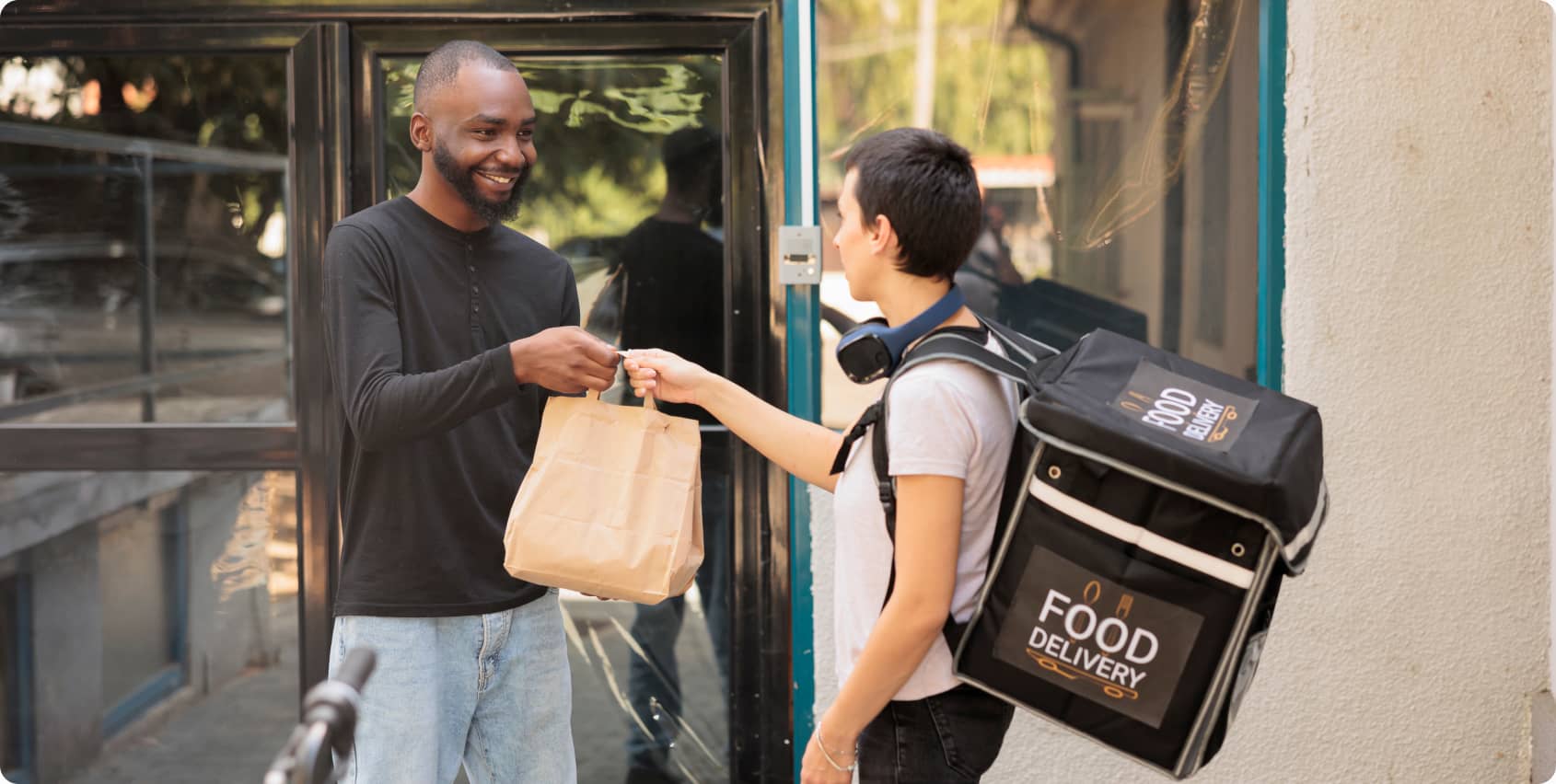
Zooming out: Euromonitor data via Retail News shows that 22% of global foodservice spending now flows through delivery, more than double the 2019 share of around 9%. The global foodservice market hit $3.36 trillion in 2025, and the delivery slice alone is projected to cross $1 trillion by 2029. Emerging markets (Turkey, Egypt, Nigeria, India, Philippines) are doing the heaviest lifting on growth rates, but the structural shift is global: delivery has moved from convenience perk to consumer default.
Amazon now calls itself the second-largest U.S. grocer
On its Q1 earnings call, CEO Andy Jassy positioned Amazon as the second-largest grocer in the U.S., behind only Walmart. Q1 net sales rose 17% year-over-year to $181.5 billion, with own-store unit growth hitting 15%, the highest since the pandemic lockdown period. The quarter's grocery momentum came from several directions, among others: one- and three-hour delivery launched on 90,000+ items across thousands of U.S. cities, and Amazon Now (30-minute delivery) started piloting in Seattle and Philadelphia.
🚗 Uber Eats: investing, expanding, and rethinking returns
Uber buys deeper into Delivery Hero
Uber increased its Delivery Hero stake by another ~4.5%, now holding roughly 7% of the Berlin-based platform after acquiring shares from Prosus. CEO Niklas Östberg welcomed Uber as a long-term shareholder, framing the investment as a vote of confidence in Delivery Hero's strategy.
Denmark launch kicks off the 2026 European expansion
Uber Eats officially launched in Denmark, the first of seven new European market entries planned for 2026. Greece, Austria, Romania, the Czech Republic, Finland, and Norway are next on the list. The rollout is part of Uber's push to add $1B in gross bookings over the next three years.

Retail returns as the next logistics layer
Uber Eats also launched a returns service in the U.S., letting customers send back eligible items via courier directly through the app. Users get an instant refund on orders over $20, with a return fee based on distance and time. Launch partners include Best Buy, Dick's Sporting Goods, Pacsun, and Petco.
🛒 DoorDash deepens its grocery footprint
In the U.S., DoorDash added four new regional grocers to its marketplace: Brookshire Grocery Co., FreshDirect, Harps Food Stores, and Market of Choice. This adds several hundred stores across the South, Midwest, Northeast, and Pacific Northwest. All four are also available on DashPass, DoorDash's $0 delivery fee membership.

In Canada, a new partnership with Empire Co. brings 1,000+ stores across 10 provinces onto the marketplace, including Safeway, Sobeys, and IGA banners. With Empire on board, DoorDash now covers four of the five largest Canadian grocery companies.
📈 Where last-mile delivery still has room to grow
It’s easy to read last-mile delivery as a maturing market. National e-grocery share keeps climbing, parcel volumes keep breaking records, and same-day delivery is becoming standard. But the next phase of competition may depend not only on who delivers fastest but also on who can orchestrate density most efficiently across fragmented urban and suburban networks. The interesting question is where the next leg of growth comes from. Two places we want to look at this month: outside the city, where rural and suburban areas remain largely underserved, and inside it, where micromobility hubs still have significant untapped potential.
Past the city core
For all the noise about e-grocery growth, look at where deliveries actually happen, and most of Germany still sits outside practical e-grocery delivery coverage. In a recent deep dive, Prof. Dr. Matthias Schu mapped the delivery zones of every major e-grocery player, and the result is a patchwork of urban kingdoms. Dense competitive clusters around Rhein-Ruhr, Hamburg, Berlin/Potsdam, and Munich are surrounded by large stretches of underserved territory.

The reason is structural. The quick commerce model that took off in cities mostly runs on dark stores and works best in dense urban cores. Each dark store serves a 2–3 km radius and needs that radius packed with enough orders to keep riders economical. Most operators have stayed in the cluster of cities where this model works.
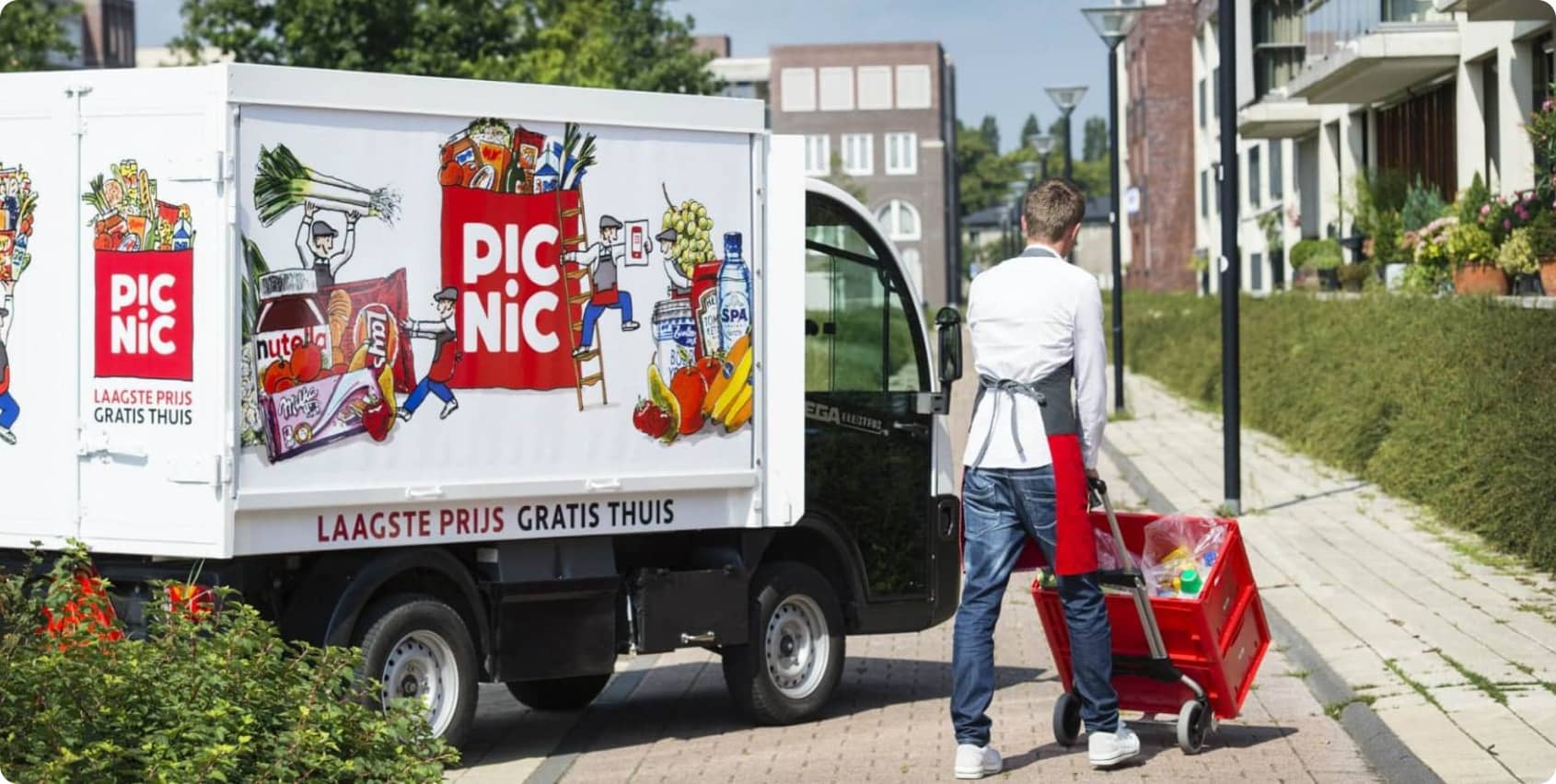
This means reaching the rest of the map requires a different operational approach. Picnic uses a hub-and-spoke model: a central fulfillment center supplies smaller local hubs each evening, and custom electric vans run fixed routes the next day. Customers in the same neighborhood get tightly batched 20-minute delivery windows, which lets the van move through the street efficiently without backtracking.
Amazon is doing something similar at a different scale. The company committed $4 billion to triple its rural U.S. delivery network by the end of 2026, opening 200+ small delivery stations to reach 13,000 ZIP codes. Parcels arrive from regional fulfillment centers, get sorted on-site, and go out the same day.
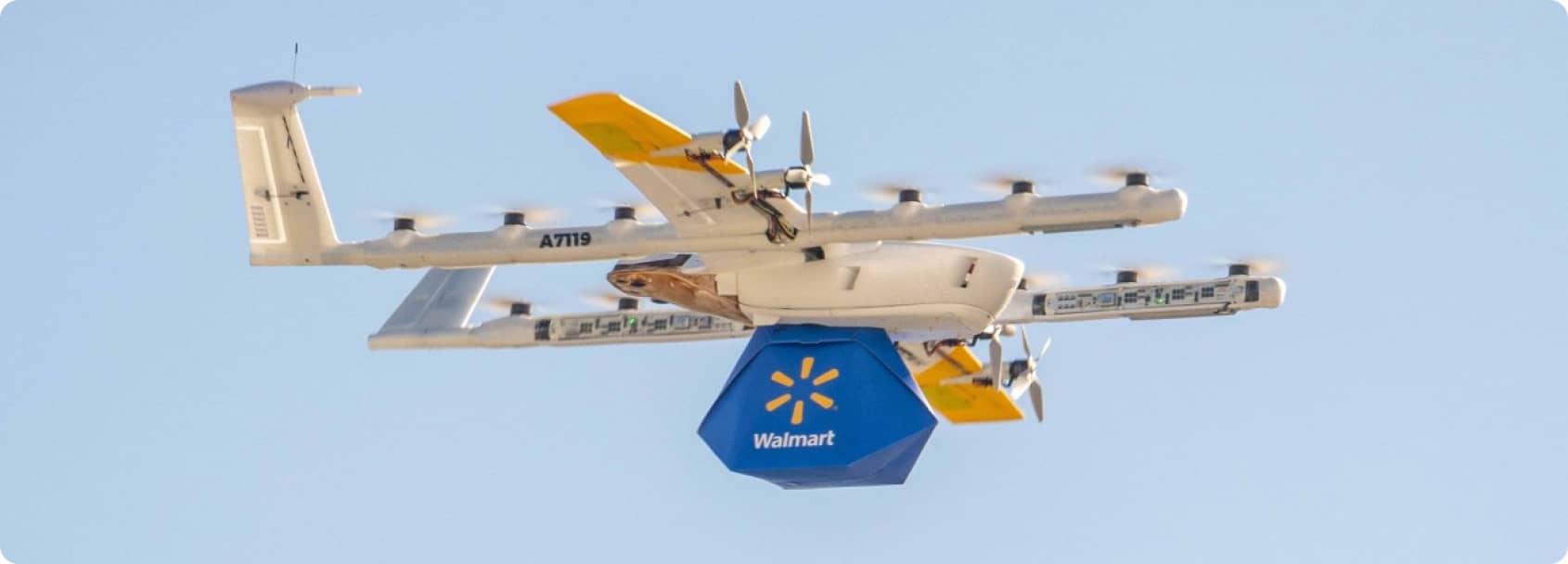
Beyond a certain drop-density threshold, even optimized van networks become inefficient. That is where alternative delivery models start to matter. As already covered a few times in this newsletter, drones could become the long-tail answer where ground density gives out. Walmart's partnership with Wing targets 270 drone delivery locations by 2027, reaching over 40 million Americans, most of them suburban.
The infrastructure underneath urban delivery
But also in the city centers, there is still a lot of room for improvement. Take micromobility hubs as an example: a few weeks ago, on 27 April, Amazon opened its third Berlin micromobility hub. From that single site, delivery partners will move more than two million parcels a year by e-cargo bike into four central districts. It's Amazon's 14th hub in Germany, part of a European network of 70+ sites. A great start, but still only a small fraction of total parcel volume.

The BPEX KEP-Studie 2025 puts German parcel volume at 4.29 billion shipments in 2024, forecast to reach 5.19 billion by 2030. The current overall hub footprint only covers a tiny fraction, even though the operational and environmental case for hubs is already proven. A decade of European studies points to 30–88% less last-mile CO₂ per parcel and up to 35% lower delivery costs in dense zones. Berlin's own Mikro-Depot-Studie puts concrete numbers on this: Berlin's largest micro-hub, handling around 3,000 shipments a day, saves an estimated 41–68 tonnes of CO₂ per year compared to conventional delivery.
What's missing is scale, but we think reaching it requires consolidation. Not all carriers generate enough volume to justify multiple hubs on their own. And when each operator builds separately, they dilute the density that makes the model work in the first place. So what’s needed now is operators willing to share infrastructure.
One option is a shared infrastructure model. A neutral third party operates an inner-city hub (e.g., in vacant retail space) where multiple carriers drop off parcels, while each carrier still runs its own cargo-bike deliveries. The operations remain separate, but sharing the real estate already reduces pressure on scarce and expensive urban space. A more ambitious option would be a shared delivery network model, where a third-party operator manages both the hub and the last-mile delivery itself. Parcels from multiple carriers would be consolidated onto the same cargo-bike routes, improving stop density and route efficiency. But while operationally more efficient, this model also requires a much bigger commercial step, as carriers would need to share delivery data and give up part of the customer relationship.
🦾 Shipping better technology for a world in Motion
Feature highlight: Failure reasons on stops
We are introducing structured failure reasons on stops. When a dispatcher or driver fails a stop, they can now pick the reason from a predefined, stop-type-specific list – for example, Recipient is unavailable or Location is closed – and optionally add a short free-text comment. The selected reason and comment are stored on the stop and visible on the booking to everyone involved.
Support for failure reasons will be rolled out across the API, Dashboard, and driver apps over the coming weeks.

Quick view of other updates:
- Active tour labels
- Real tour routes on the Dashboard
- Simplifying service selection with service keys
- 500-character limit on free-text fields
Upcoming Deprecations:
- Deprecation of the failure reasons endpoint