Welcome to the first LogTech News edition of 2026!
We hope you had happy holidays and a good start into the new year.
Today, we want to spend some time looking into what’s ahead for this year. We recently announced the launch of our new platform NOW.delivery, with the mission to connect merchants with local courier operators faster and more efficiently. The last mile is becoming more important than ever, with a wave of promising developments helping turn fast delivery into something far more accessible. That’s why we’ll break down three trends we see shaping the year ahead, plus some events merchants and logistics operators will attend.
And as always, you’ll find a quick look at what’s new in MotionTools in our latest release notes.
Let’s get into it.
📢 Trends 2026
Fast deliveries for everyone
A few years ago, express last-mile delivery felt like a science experiment. How fast is too fast? Will people really pay for groceries in 10 minutes? And can any of this actually make money?
Fast-forward to 2026, and the experiment phase is over. Between the pandemic-fueled quick commerce hype and today, the industry has grown up, taken a few bruises, and figured out what actually works.
And there’s still plenty of runway ahead—more customers to reach, more regions to serve, and use cases that haven’t fully unlocked yet. The focus now is on scaling proven models sustainably and extending fast delivery beyond dense city centers.
Among others, we saw three shifts that started gaining momentum in 2025 that we think will shape how last-mile delivery evolves in 2026:
- 3PLs becoming the backbone of flexible scale
- Autonomous deliveries joining human fleets
- Micro-fulfillment centers pulling inventory closer to demand
Let’s break down how we think each of these is pushing fast delivery from a premium perk toward everyday infrastructure.
3PLs are becoming the backbone of flexible scale
A few newsletters back, we discussed how 3PLs are going to become critical players in last-mile logistics. Looking ahead to 2026, that prediction is playing out as merchants move away from building their own fleets and instead tap into existing delivery networks powered by 3PLs.
Running an express last-mile operation in-house as a merchant is brutally expensive and inherently inflexible. Hiring and managing your own fleet creates fixed costs that destroy margins long before checkout flows or conversion rates are fully optimized. Expanding into new and/or suburban areas only amplifies that risk, requiring time, capital, and operational complexity most merchants can’t afford.
That’s where modern, tech-enabled delivery operators come in. Many 3PLs (and 2PLs looking to become 3PLs) already have the hardest parts figured out: drivers, vehicles, local routing knowledge, and on-the-ground density. What they’re looking for now is better utilization of what they already have — more consistent demand, fuller shifts, and the opportunity to expand their delivery regions.
Put simply, merchants and 3PLs solve each other’s hardest problems.
- Merchants outsource delivery with zero fixed overhead and pay only per order
- 3PLs keep fleets busy and drivers earning, even outside peak hours

This is where orchestration becomes the real differentiator. Platforms like NOW.delivery connect merchants with 3PLs through a single network, making coordination seamless, routing intelligent, and scale possible without added complexity.
That orchestration is also what makes suburban express delivery far more feasible. In suburban areas, neither merchants nor 3PLs generate enough volume on their own to run express delivery efficiently. But when demand from multiple merchants is pooled across multiple operators, sustainable delivery density emerges.
Autonomous deliveries are joining human fleets
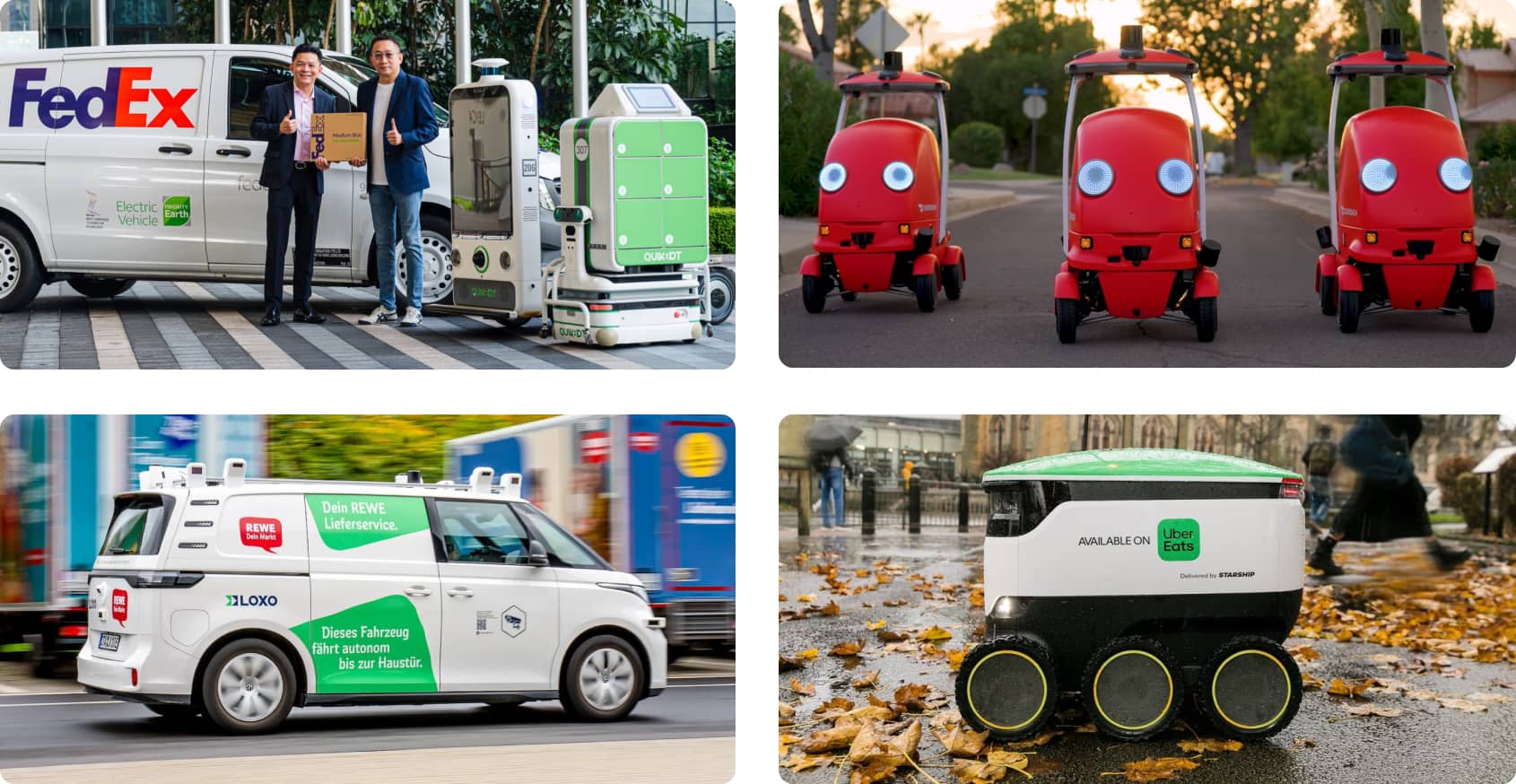
In 2025, autonomous delivery mostly lived in smaller pilots and controlled test zones. In 2026, those experiments are starting to earn a permanent spot on the roster. That shift is already visible in how leading operators are rolling autonomy into live delivery environments:
- FedEx deployed autonomous delivery robots with QuikBot for fully operational last-meter deliveries inside large commercial buildings in Singapore.
- DoorDash developed their own sidewalk bot (“Dot”) and also teamed up with Waymo for driverless car deliveries.
- Rewe tested small delivery bots in Hamburg and Level-4 autonomous vans in Bochum.
- Uber Eats rolled out delivery robots in the UK with Starship Technologies.
Now they’re in a position to scale — and not in the “robots take all the jobs” way. What’s emerging instead are blended fleets, where machines handle the repetitive, predictable parts of delivery and humans focus on everything that still requires judgment and flexibility. That balance is quickly becoming one of the most practical ways to soften ongoing driver shortages.
Looking a bit further ahead, drones are set to become another layer in these blended fleets. In the U.S., Walmart is already partnering with Zipline to deliver orders by air. The appeal is straightforward: drones unlock faster delivery to suburban and remote areas, bypass ground-level congestion, and extend last-mile reach where traditional fleets struggle to scale.
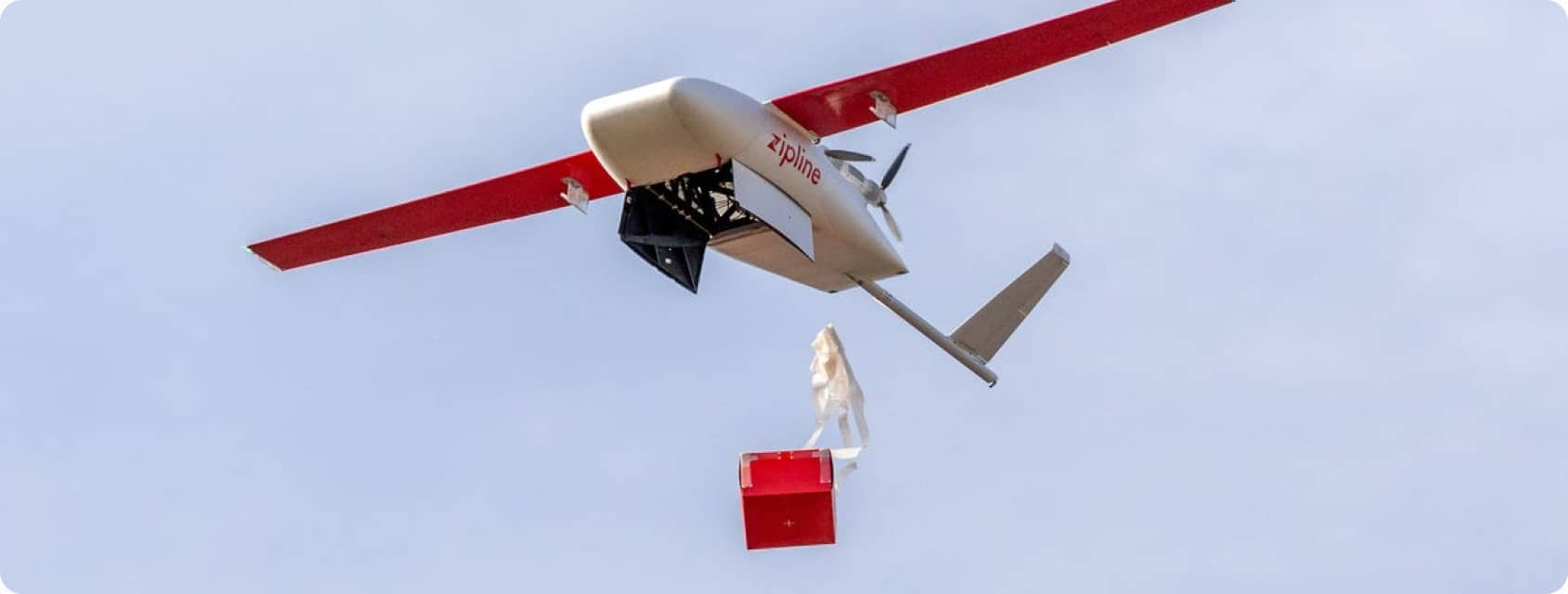
But it’s not only important how orders move to make fast deliveries available to everyone, it’s also about where they start.
Micro-fulfillment centers are pulling inventory closer to demand
Quick commerce gave us dark stores and dark kitchens. The next evolution is the micro-fulfillment center (MFC) — small, tech-heavy warehouses tucked close to demand.
Instead of relying solely on large, centralized warehouses built for regional coverage, MFCs create localized inventory pools that can serve cities and surrounding suburbs with the same level of service. The result isn’t just faster delivery, but broader reach.
What makes them work:
- Strategic location: 3–5 miles from dense demand
- High-velocity SKUs: Focus on fast-moving products; replenish long-tail from upstream
- Automation: Robotics can cut fulfillment costs by up to 75% per order
- Fleet integration: Seamless handoff to local couriers
- Hybrid models: Combine MFCs with existing stores for maximum coverage
Fast delivery in 2026 is no longer about pushing the limits of speed for a narrow group of urban customers. It’s about turning speed into infrastructure — something that works across cities, suburbs, and use cases without collapsing under its own cost.
📆 Events 2026
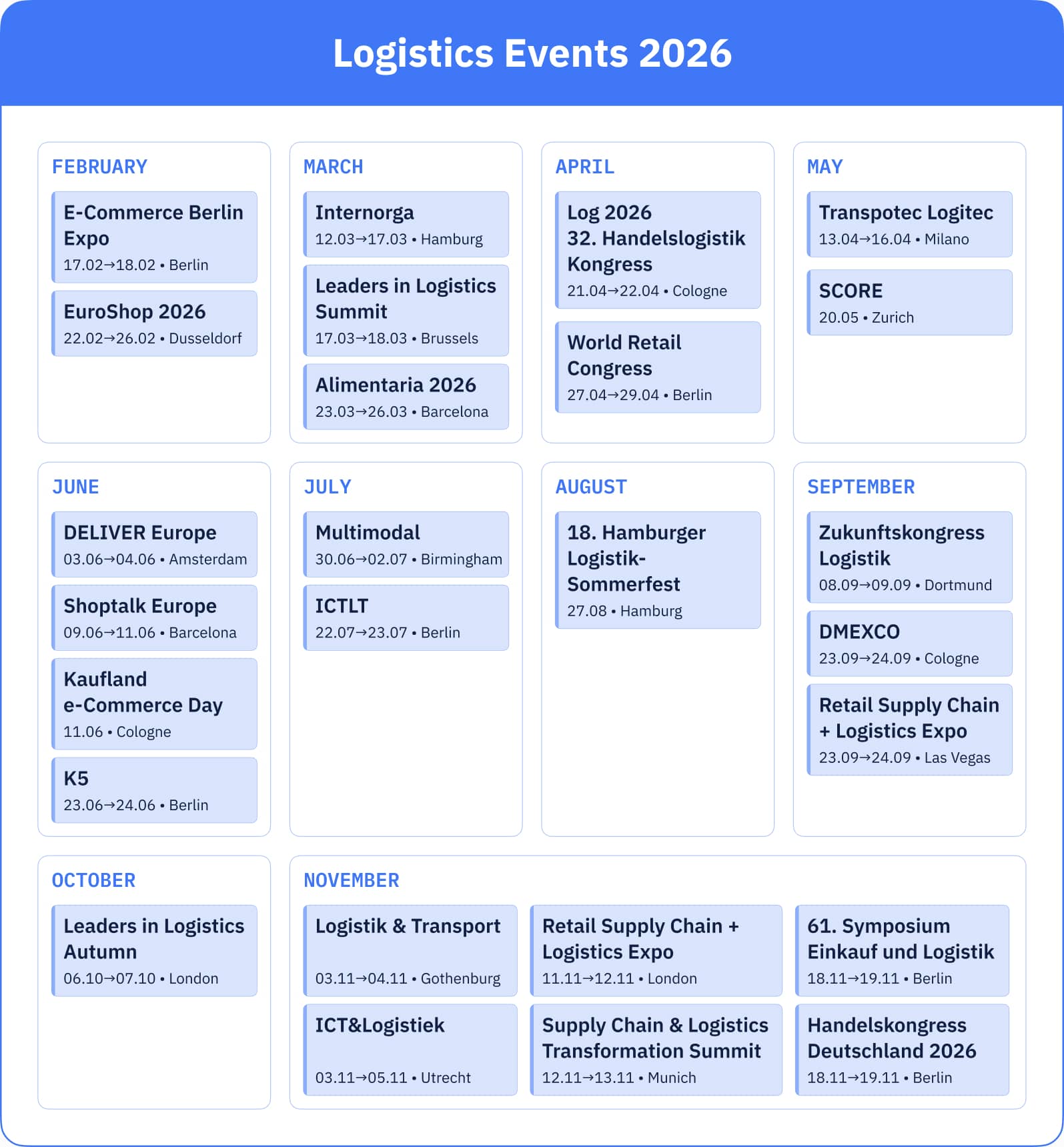
In 2026, the last-mile logistics world will meet at events in Germany and beyond. Trade shows, conferences, and congresses will bring together operators, merchants, and tech builders to swap notes, spot trends, and discuss the future of delivery.
We’d love to meet you there in person! Our founders, Patrick and Marian, will share where they’ll be throughout the year on LinkedIn and, of course, right here in the newsletter.
Like last year, we’ve put together a curated 2026 event calendar featuring conferences with strong agendas, smart speakers, and networking that’s actually worth the badge. Click the image to view it full size and save it for planning your travel itinerary.
🦾 Shipping better technology for a world in Motion
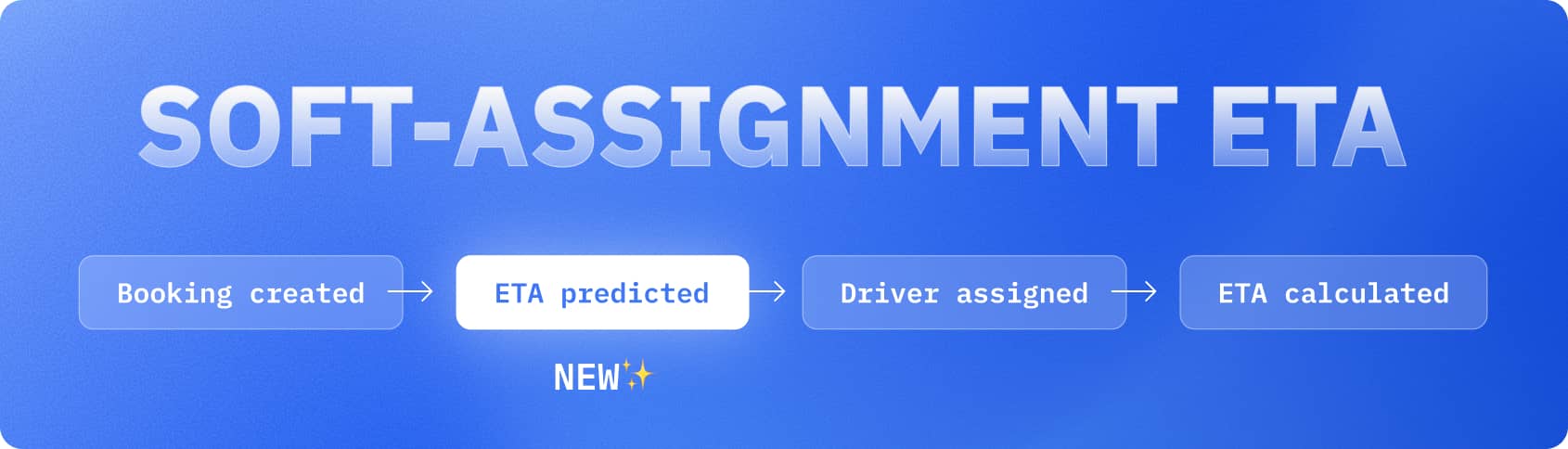
Feature highlight: Soft-assignment ETA
We're introducing soft-assignment ETA – a new way of calculating and sharing estimated arrival times. Now, as soon as a booking is created, we calculate when a driver will likely arrive at the pickup location, even before a driver has been assigned to the tour.
Quick view of other updates:
- Stacking engine updates
- External ID carry-over for duplicate bookings
- Improved cancelation experience in the Driver app
- Support for past tours without stops in the Driver app
- Configurable “Ditch tour” button in the Driver app
- Intercom Integration for driver communication
- Ongoing performance improvements